Articles by: Kate

Sustainable paving

Dichondra

There are more outdoor paving options than you may think, and environmental and financial costs can be high. Careful consideration should be taken for hard- wearing surfaces with timeless appeal.

Planning the hard landscaping or built components of your garden may present many of the same dilemmas faced when building or renovating. Just as you might scrutinise the source, embodied energy and durability of your building materials, you should apply the same eagle eye to your paving choices. The purpose of the paving will obviously also influence your choice of product, and of course aesthetic is essential. If it doesn’t look good, its likely to be removed and replaced down the track with additional financial and environmental costs.

Your materials choice should be influenced by both the style of the building and what’s already in your garden. The garden should be an extension of the building it surrounds, and for the two to complement each other there needs to be continuity, both in the materials used and the and the landscape design. For example, a brick house or a house with brick detail in the finish, could see this detail replicated through the paving. This could be in the form of a border for a gravel driveway or concrete paved space, or could be woven throughout the other elements as a pattern. You should be able to match your brickwork through a recycling yard or manufacturer with relative ease.

Aside from design issues, there is also the practicality of the material to be used the permeability of the base. A permeable base, which which allows rainfall to soak into the ground, is preferable. The increasing amount of impermeable hard surfacing in our cities and suburbs has an impact on surface water flooding and river pollution, and can also reduce ground water levels with wider ecological impacts.

The source of the materials used is also important. Most landscaping materials have come out of the ground at some stage, so we need to consider the where, what and how versus the longevity of the finished product. As with all building products, opting for recycled materials can help reduce demand for the virgin product. Transport miles from quarries to distribution centres and to the site should also be considered. For more sustainable tips, see www.aila.org.au/materials

Extract of article that first appeared in Sanctuary Magazine issue 28 words by Kate Smalley – Small Spaces Garden Design, Managing director.

Rethinking Concrete in Coburg

This project in Coburg was completed by the Small Spaces team in Summer 2019. Our clients wanted help with establishing the “bones” of their garden. They have a keen interest in perennial gardening and the brief was we create the underlying structure for them to build on. 
small spaces garden designs

We designed a smart layout that was striking and functional. Kate (Small Spaces head designer) suggested a curved garden wall that would create a border for garden beds as well as raised seating. This seating could be used when hosting friends and family alfresco. The retaining walls and raised beds can pull double duty if they are at seating height and softened with cushions or a folded blanket. Perfect for entertaining.

The curved wall also added extra dimensions to the overall aesthetics of the space. Creating structure and interesting lines.

Clean lines bring an orderly feel to the garden. The use of flowing organic curves was used to soften awkward angles and the severity of the concrete. We think the outcome was excellent.

The curved line of the garden wall was continued at ground level to create a semi enclosed area for the clothesline as well as a herb and vegie garden, with a second sitting area.

A concrete wall is rotproof, rustproof and fireproof and, if built correctly, will last for decades. An environmentally friendly option as it is made from natural materials, such as clay and limestone, in many are locally sourced.

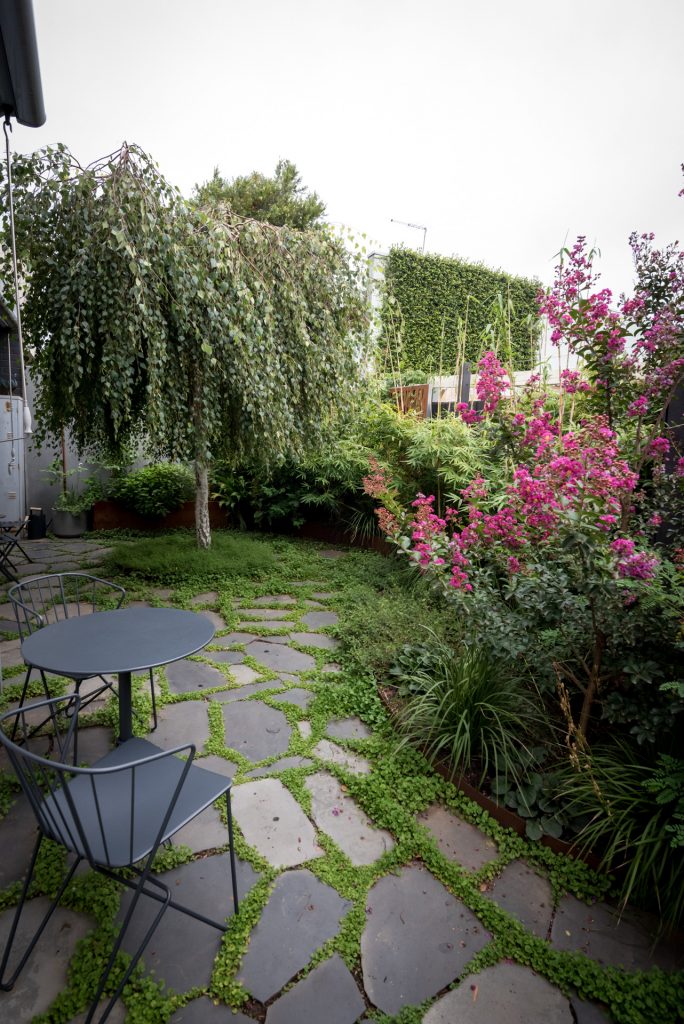
Random paving stones with open ground covers and herbs were used to create stunning pathways through the garden and along the side of the house.

We painted the fences “monument grey” to create drama and a perfect backdrop to amplify the colours of the flowers in the raised garden beds, and contrast the grey of the concrete and paving stones.

rethinking concrete designs in brunswick
Concrete idea designs


Corten Steel Planters Boxes

small balcony
Balcony Garden in Melbourne

Corten steel planter boxes are functional, sustainable and enhance the aesthetics of a well designed small garden space. Planter boxes create scale, height, shape and drama.

Corten steel is the common name for weathering steele which is designed to develop a thin layer of rust that acts as a protective coating. The patina that Corten steel acquires as it ages works beautifully with wood, stone, grasses, concretes and of course plants and trees.

Small Spaces love the variations of texture and the fact that planter boxes can be designed and built to bespoke dimensions for all spaces. The patina of bronze, rust and copper hues it develops as it ages compliment both naturalistic and architectural designs.

Both low maintenance and longevity are major benefits of using Corten Steele in the garden. It should be left unfinished – Not painted or waxed as it is corrosion resistant and develops character as it ages. If damaged or scratched the material will soon smooth over to cover the visible marks. The rust serves as a protective coating.

When working in a small space such as courtyards, patios & rooftops the Steele planters can create statement pieces that will really draw the eye and enhance the aesthetic contrast of the garden design by adding height, shape and structure to an area with limited space.

Here at Small Spaces we can incorporate a corten steel element into your garden design. The possibilities are almost endless!

Inner City Courtyard with Charm

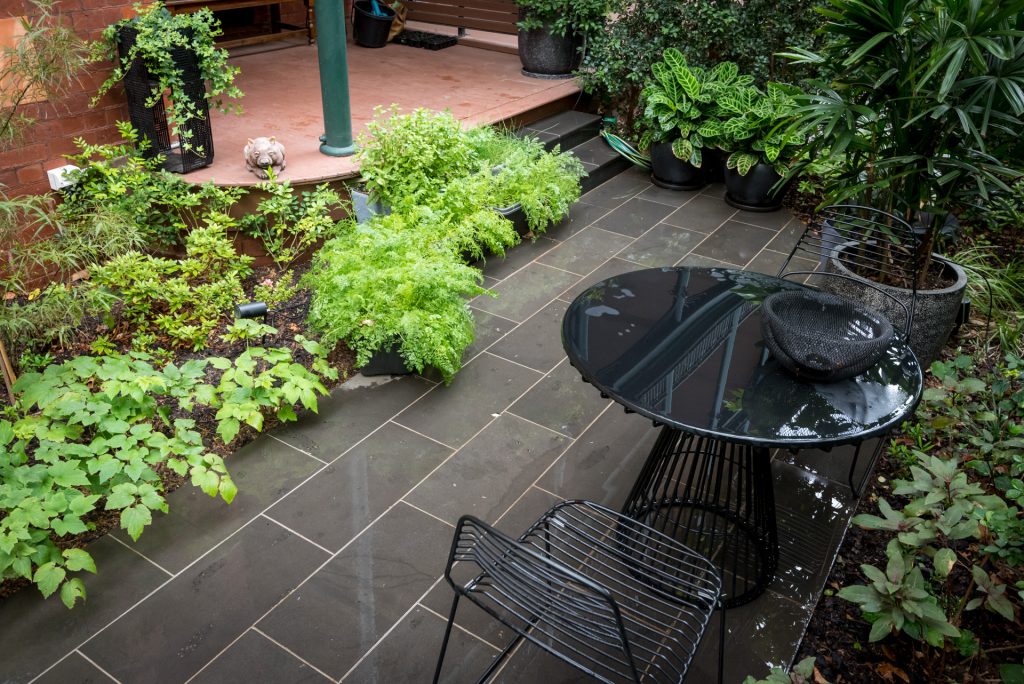
In 2018 we were charged with creating a courtyard sanctuary in inner city Melbourne where our clients could sit and watch the passing parade but still have privacy. As their apartment was small, the courtyard needed to be designed to function as an outdoor room as well as a garden.

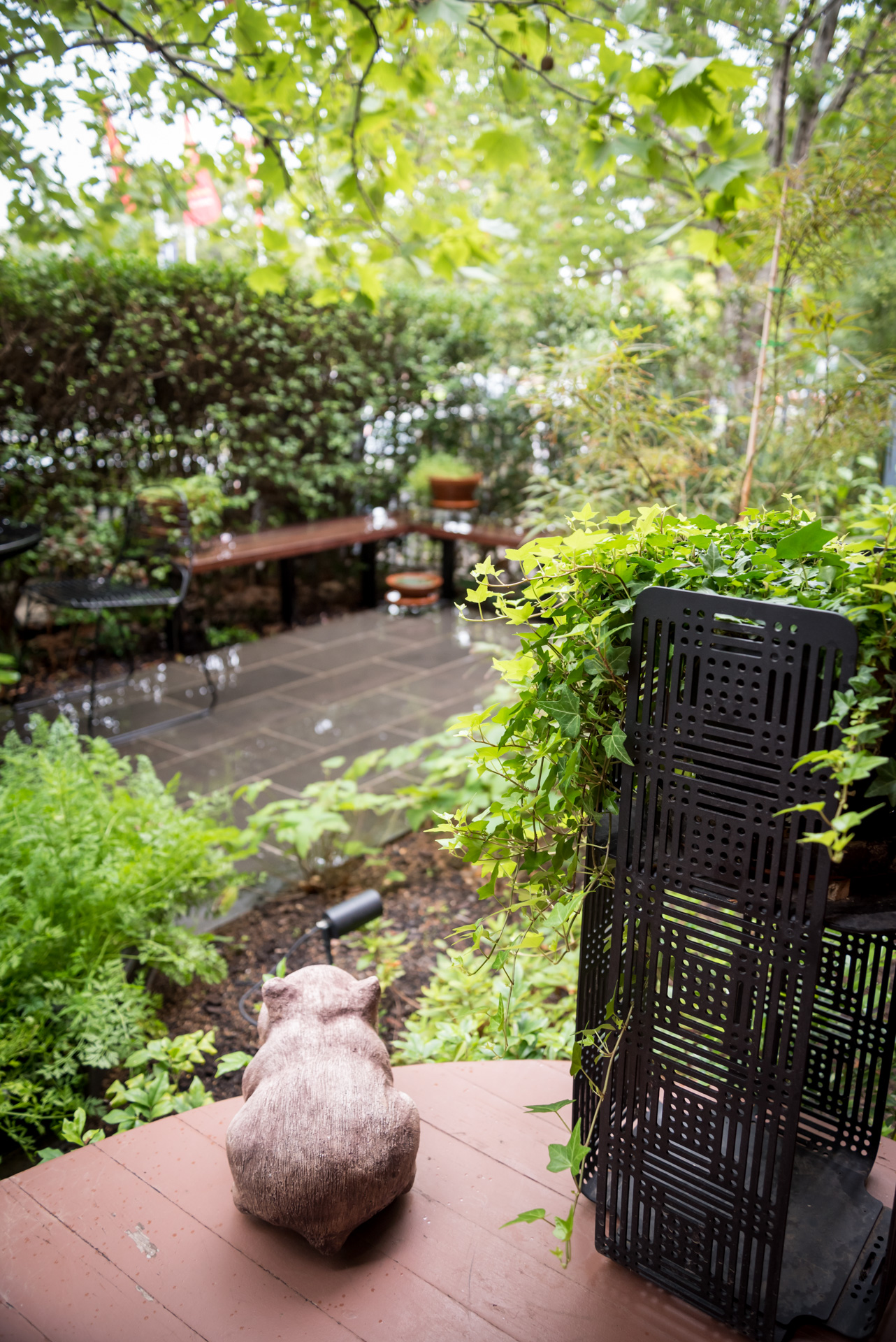
Working with the clients we designed a beautiful green space utilising bluestone paving for the flooring and Lilly Pilly’s to create a living screen between their property and the neighbours.  The original hedge that ran along the front fence was unattractive, gnarly and did not offer privacy due to its poor condition. After tip pruning, fertilising and installing a drip irrigation system that supplied water directly to the root zone it returned to its former glory! We installed a floating bench seat along the back of the hedge. This could be used for private relaxation or seating for a larger group when our clients are hosting friends and the weather was conducive to entertaining.

The clients requested a simple green, full, lush garden layered top to bottom.

  • For ground cover we utilised, Gardenia, Lambs Ear, Violets and Sedum Autumn Joy.
    Blog
  • Mid level plants we used Fuchsia, Hydrangea, Winter Iris and New Zealand Rock Lilly.
  • Top tier we planted Japanese Windflower, Azalea Alba and a Port Wine Magnolia.

We suggested they add a water feature to offset the city noise which we sourced from Kelloch Pots and Planters in Seaford, https://www.kellockpotsandplanters.com.au

We integrated lighting to illuminate paths for security and safety as well creating depth. Good lighting also allowed for our clients to utilise the space at night.

Garden Consultation during lockdown

During COVID 19, Small Spaces is still operating and we are keen to help out with advice on your garden. You can still start the design process while we are in lockdown.  We can arrange a garden consultation on line, and walk through your garden remotely.  

More
Windsor decking

Decked out courtyard

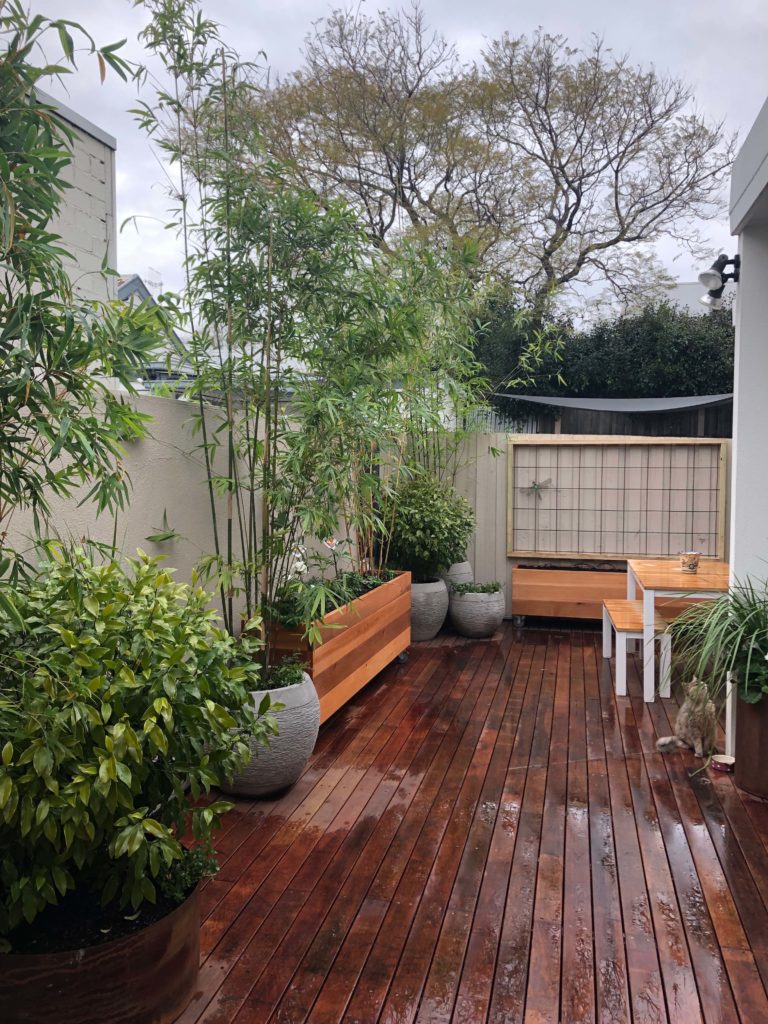
This courtyard had a deck already to go, we just needed to do the courtyard design to complete the picture. Our brief, to create a green space with raised planters, soften the view and finish on all the fences, and some space to grow a few edibles.
Our solution, we installed planter boxes on castors for some flexibility and a mix of concrete pots with corten steel, to give some depth and interest to the garden space.

We often work with Future Environment, they build custom sizes for us, so we can mix it up depending on our courtyard design. http://www.futurenvironment.com.au/

Pots by https://potsnpots.com.au/ for some lovely (and heavy!) concrete pots.

Steel Planters

Planters in small spaces

Making the most of a small space with raised planters can be tricky.

Building raised garden beds can sometimes take up lots of valuable space and may appear too chunky for the space.  Opposite to this is using lots of pots, which may or may not work.  Pots are great but sometimes you want a more streamlined look.  This is where I tend to go for steel planter boxes and cylinders.

These can be manufactured to whatever size I want and, are relatively simple to make and install.

Round, square, rectangles, narrow and high, short and squat to tier the garden.  Anything you fancy.

Colours can be bright and showy, subdued and muted, it’s flexible, using a wide range of powder coat colours, or, Cor Ten steel for a more organic look.

These are 3 vastly different projects we have worked on recently;

a narrow bluestone terrace in a new build,  a modern townhouse and a native garden with a lovely new paved terrace overlooking the garden, all dotted around Melbourne.